What a Workflow Automation Consultant Does
AI For Businesses
A workflow automation consultant helps SMEs cut admin, fix messy systems and build practical AI workflows that save time without adding complexity.
Most businesses do not have an automation problem. They have a clutter problem.
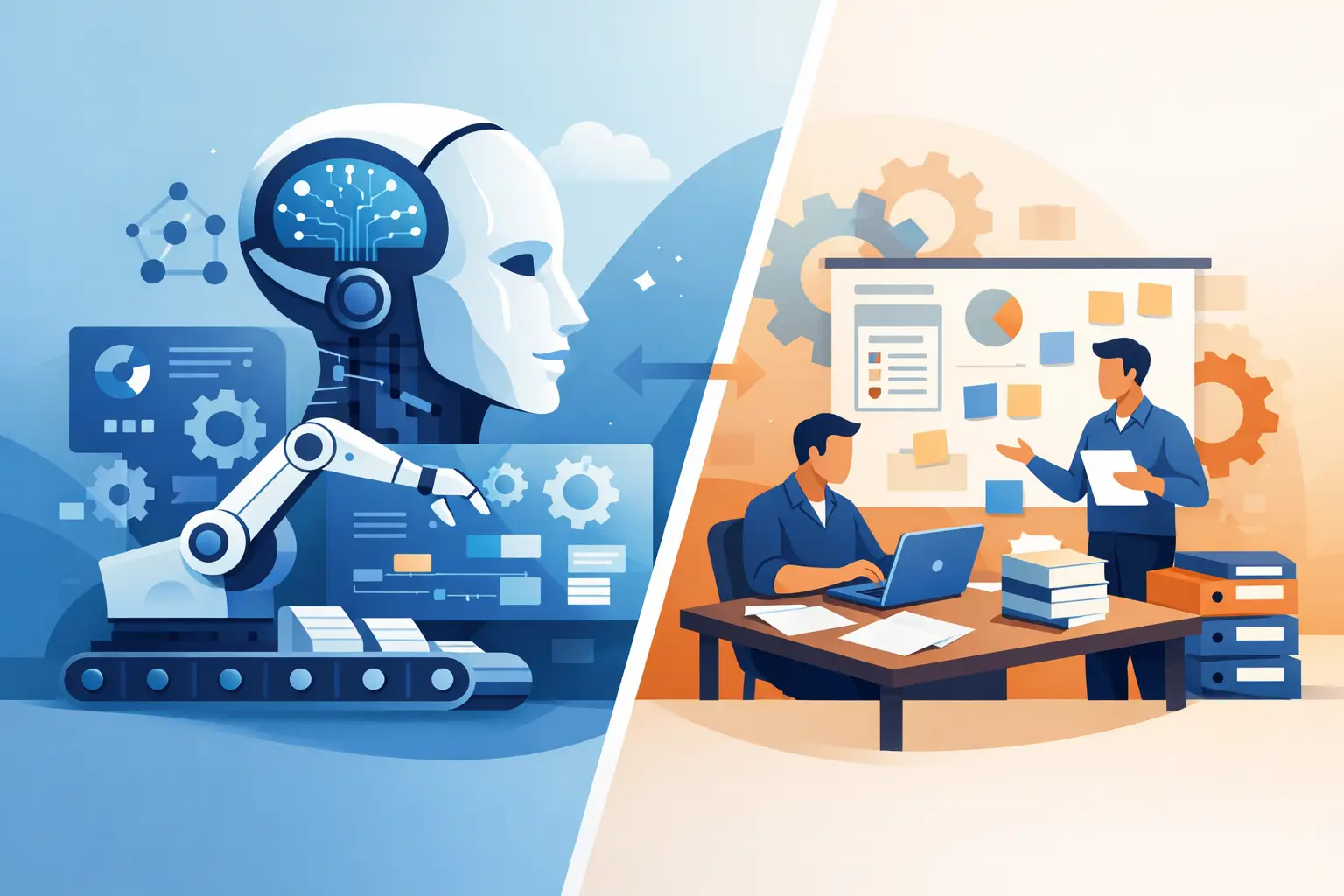
Too many tools. Too many workarounds. Too many tasks living in inboxes, spreadsheets and someone’s head. A workflow automation consultant helps sort that out. Not by throwing more software at the business, but by looking at how work actually moves from one step to the next and fixing the gaps that slow everything down.
For small and mid-sized firms, that matters more than another strategy deck. The real value is not in talking about efficiency. It is in building systems that reduce admin, improve handovers, and stop routine work from relying on memory and goodwill.
What a workflow automation consultant actually does
At a practical level, a workflow automation consultant looks at repeated business processes and asks four simple questions. What is happening now? What is breaking? What should be standardised? What can be automated without causing new problems?
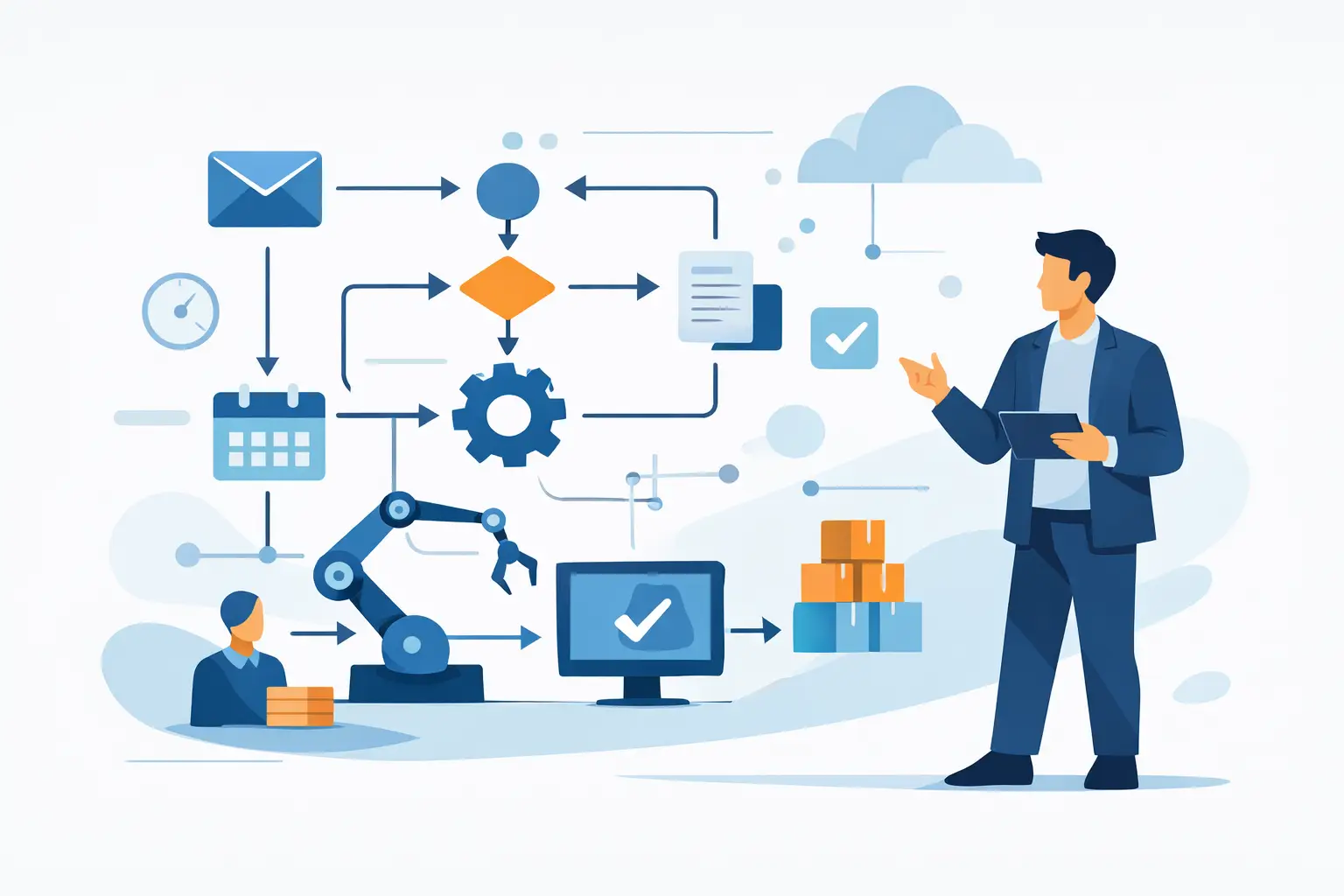
That might mean mapping how enquiries come in, how leads are qualified, how client onboarding works, how projects are handed from sales to delivery, or how finance chases overdue invoices. In some businesses, the issue is not volume. It is inconsistency. Two people do the same task in different ways, and neither way is documented.
The consultant’s job is partly diagnostic and partly hands-on. They are there to identify wasted motion, but also to help build a better operating rhythm. That can involve choosing tools, tightening process design, writing automation logic, setting up AI-assisted steps, and making sure the business still owns the result.
The best work is rarely flashy. It is often a cleaner intake form, a better approval flow, automatic document generation, sensible task routing, or a reporting process that no longer takes half a day at month-end.
Where businesses usually get stuck
Most firms do not start from zero. They already have software in place and some form of automation, even if it is just rules inside a CRM or a few connected apps. The problem is that these setups often grow in a piecemeal way.
A manager adds one tool to solve a short-term issue. A team member builds a workaround in a spreadsheet. Someone signs up for an AI assistant because it sounds promising. Six months later, the business has three overlapping systems, patchy adoption, and no clear view of what is saving time and what is creating extra work.
This is where a workflow automation consultant earns their keep. They can see the difference between a process that needs automation and one that needs simplification first. That distinction matters. If you automate a messy process, you usually just make the mess faster.
There is also a people side to this. Businesses often assume the barrier is technical, but it is just as often operational. No one owns the workflow. Staff are too busy to redesign it. The founder knows it is inefficient but cannot step out of delivery long enough to fix it properly. So the problem drags on.
What good workflow automation consulting looks like
Good consulting in this space should feel grounded. It should start with the business model, not with a tool demo.
A decent consultant will ask where time is being lost, where work gets delayed, where errors happen, and which tasks pull senior staff into low-value admin. They should care about margins, response times, capacity and handover quality. If they go straight to recommending a stack before understanding the operation, that is usually a warning sign.
They should also work in plain English. Most owners and managers do not need technical theatre. They need a clear view of what is worth fixing now, what can wait, and what kind of return they can expect from the work.
There is a trade-off here. Some consultants are strong on process and weak on implementation. Others can build automations but do not understand how a business actually runs. The strongest ones combine both. They can map the operation, spot the commercial friction, and then build practical systems that fit the team you already have.
The difference between automation and AI
This is where the market gets noisy.
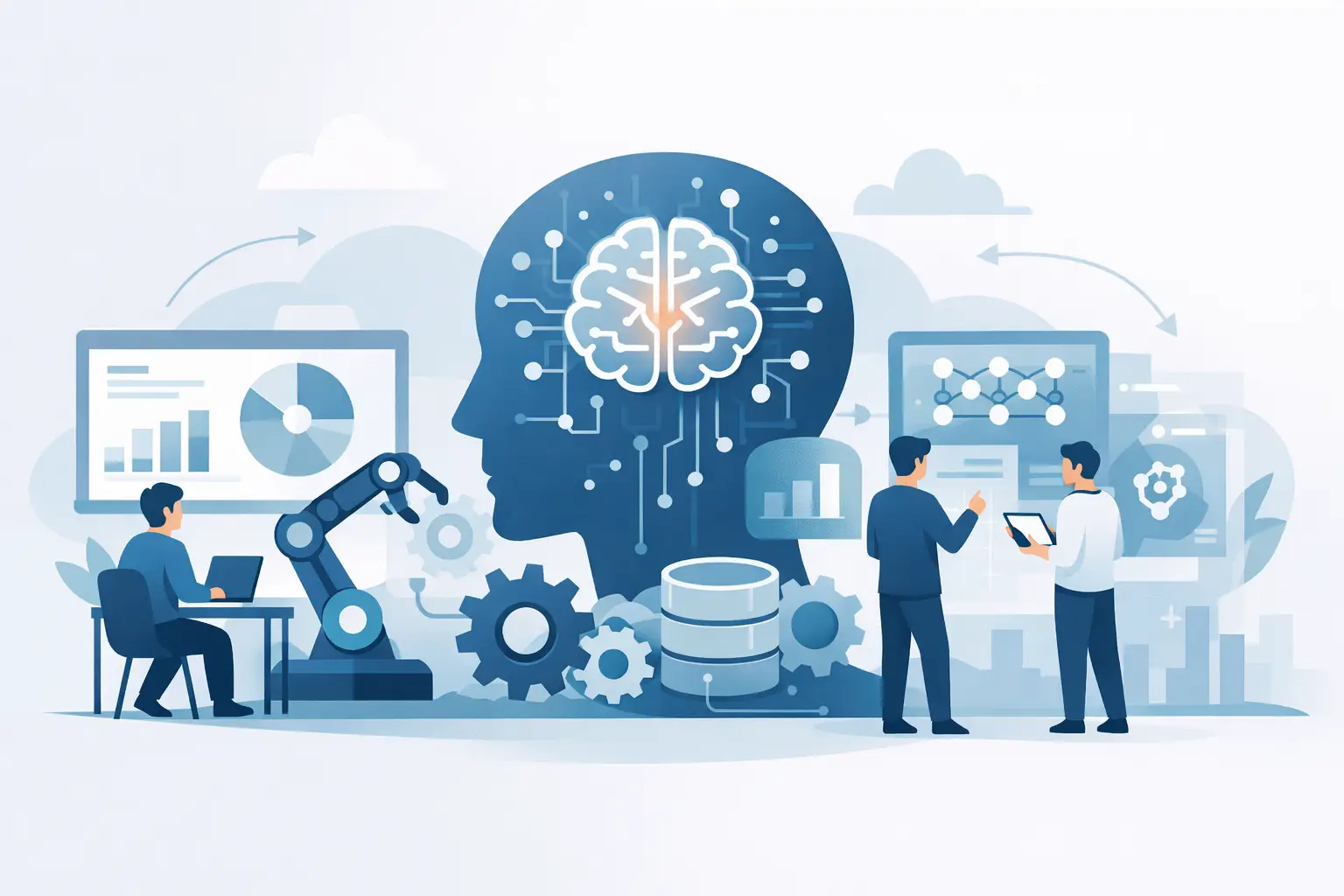
Automation and AI overlap, but they are not the same thing. Automation is about making a defined process happen with less manual effort. AI is useful when a step requires judgement, interpretation, summarising, drafting, classification or pattern recognition.
For example, routing a web form submission into a CRM and assigning a task is automation. Summarising a discovery call, drafting a follow-up email and tagging the enquiry by service type brings AI into the process.
A workflow automation consultant who understands AI can add real value here, but only if they use it carefully. Not every workflow needs AI, and adding it where it is unnecessary can increase cost and complexity. In many SMEs, the first gains come from cleaner process design and basic automation. AI becomes more useful once the underlying workflow is stable.
That is one reason practical firms such as AI For Businesses focus on implementation rather than hype. The point is not to force AI into every corner of the company. The point is to build working systems that save time and improve delivery.
When it makes sense to hire a workflow automation consultant
Usually, the right time is when the business has outgrown informal ways of working.
You might be hiring around inefficiency. You might have team members doing repetitive admin that should have been standardised months ago. You might be losing leads because responses are slow, or struggling to track projects because updates live across email, chat and separate documents. Sometimes the trigger is growth. Sometimes it is operational fatigue.
It also makes sense when you already know the pain points but cannot get internal momentum. Plenty of business owners can describe the exact process that is broken. What they lack is the time and implementation capacity to redesign it properly, test it, and get it embedded.
That said, not every business needs a consultant immediately. If your processes change weekly, or you are still working out your offer, heavy automation can be premature. In that case, a lighter approach is often better. Get the workflow stable first. Then automate the parts that repeat.
What results should you expect?
The honest answer is that it depends on the maturity of the business and the quality of the starting data.
In a well-run company with decent systems, improvements may be incremental but still worthwhile. Saving five hours a week for a senior manager is not dramatic on paper, but over a year it adds up. In a messier business, the gains can be more obvious: fewer missed follow-ups, faster onboarding, better visibility, less duplicated data entry, and fewer tasks dropped between departments.
The strongest result is usually not just time saved. It is better control. You can see where work is, who owns what, what is delayed, and what is happening without needing to chase people across the business.
That matters because growth puts pressure on weak processes. If the operation depends on heroic effort, it does not scale well. Good automation creates consistency without making the business rigid.
How to choose the right workflow automation consultant
Look for someone who can explain their thinking clearly and show how they work. Ask how they assess a process before recommending tools. Ask whether they build on your existing accounts or create dependency. Ask how they handle documentation, training and ongoing refinement.
You also want realism. A good consultant should tell you when not to automate something yet. They should be comfortable simplifying, removing or combining steps rather than protecting every legacy process. If everything sounds easy, quick and universally applicable, be careful.
For UK businesses, context helps too. Working with someone who understands your operating environment, team structure and expectations around data handling can make implementation smoother. Not because the technology is different, but because the business reality is.
A workflow automation consultant should leave you with more ownership, not less. Better processes. Fewer loose ends. Systems your team can actually use.
If that is the outcome, the work tends to pay for itself more than once. The business gets calmer, clearer and easier to run - which is usually the real goal.
Written by
AI For Businesses
The team at AI For Businesses helping UK companies adopt AI in practical, build-focused ways.
Enjoyed this article?
Get more practical AI tips delivered to your inbox weekly.