What an AI Workflow Consultant Actually Does
AI For Businesses
An AI workflow consultant helps firms cut admin, fix messy processes and build practical AI systems that save time without adding more software.
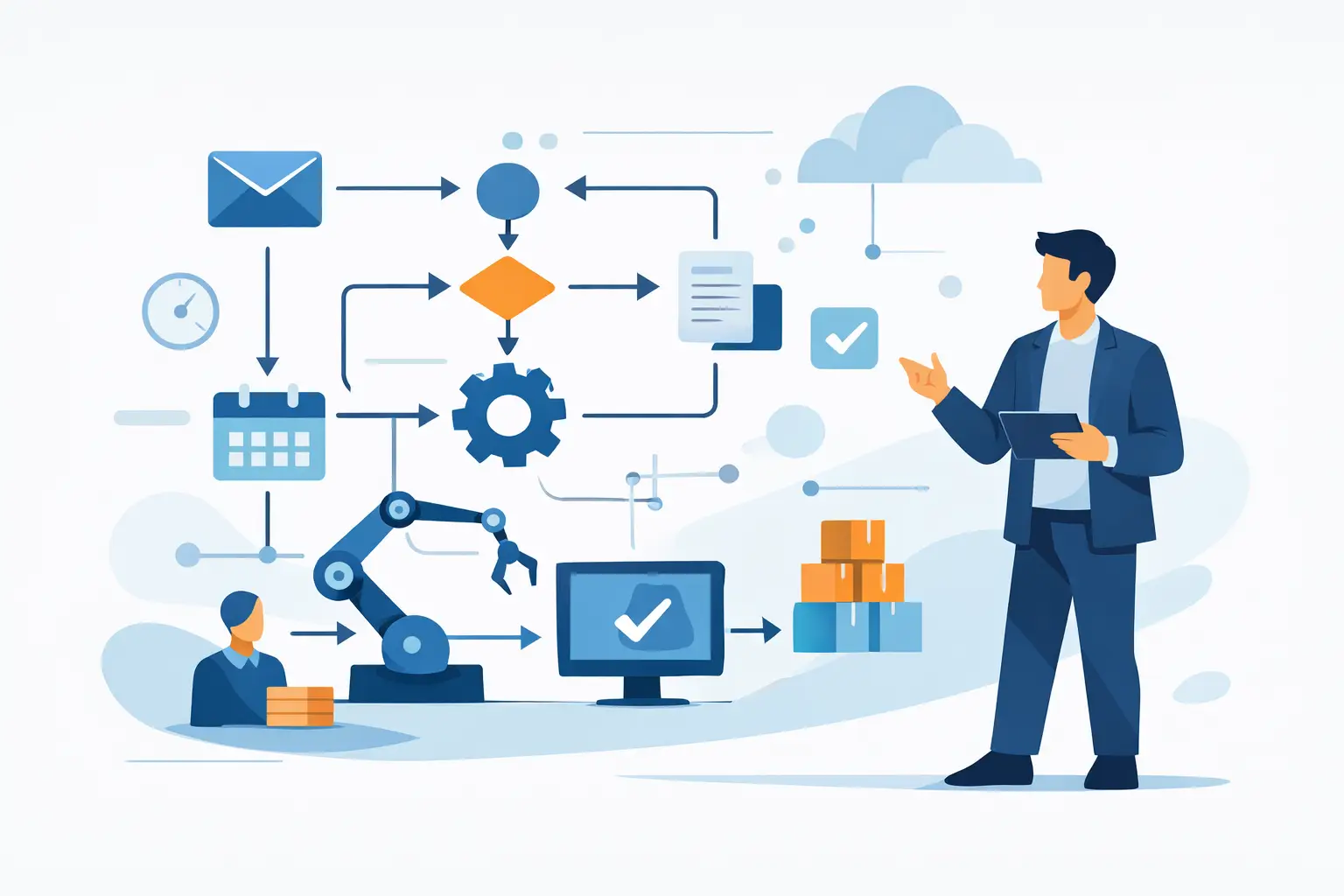
If your team is copying data between systems, rewriting the same emails, chasing updates in Slack, and still finishing the week with a backlog, you do not have an AI problem. You have a workflow problem. An ai workflow consultant helps you fix that properly - by looking at how work moves through the business, where time is lost, and where AI can take pressure off without creating more software sprawl.
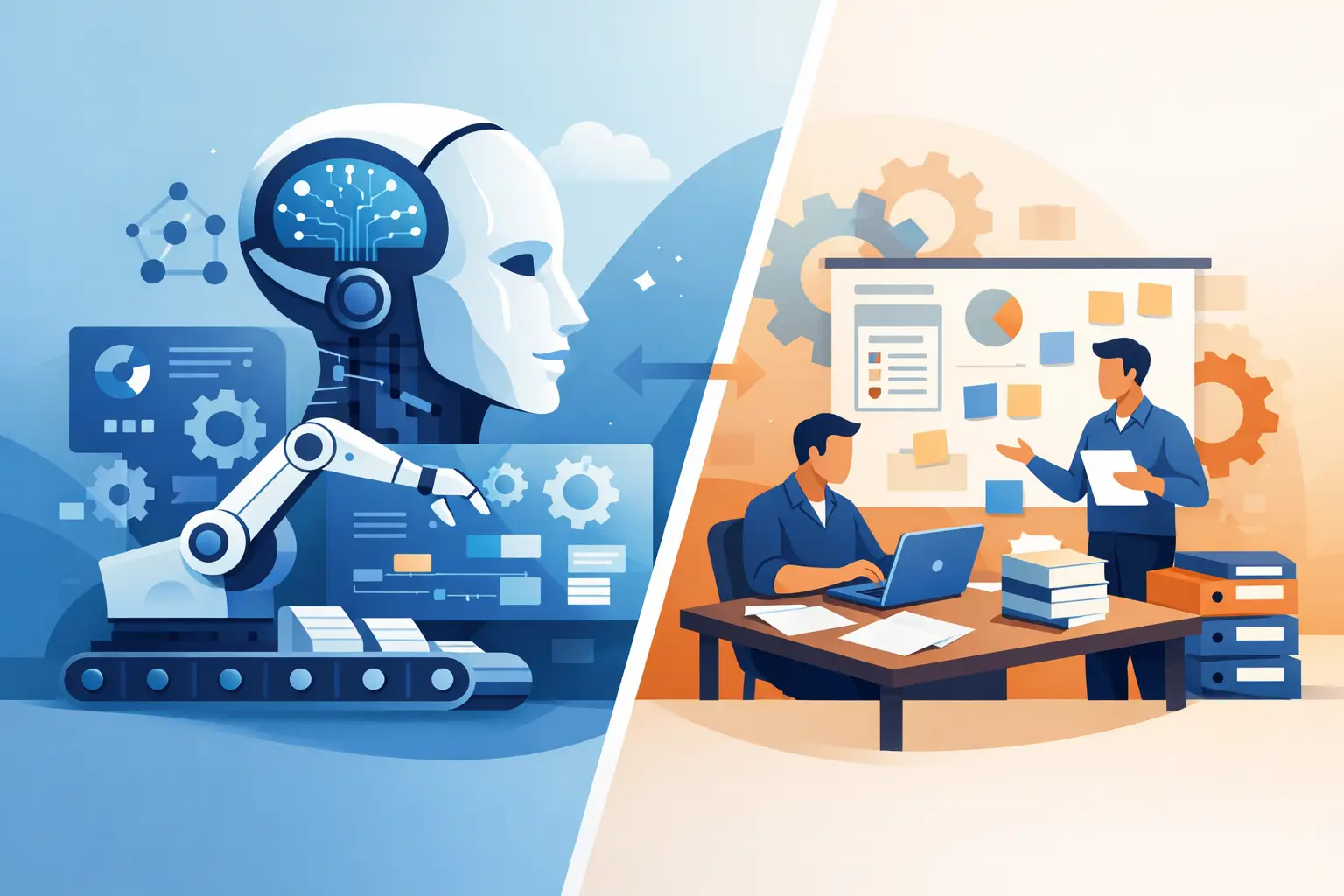
That distinction matters. A lot of businesses think they need "AI" when what they really need is a clearer operating system. The right consultant does not start by pushing tools. They start by asking what is slow, repetitive, overdue, or dependent on one overworked person. Then they build from there.
What an ai workflow consultant is there to do
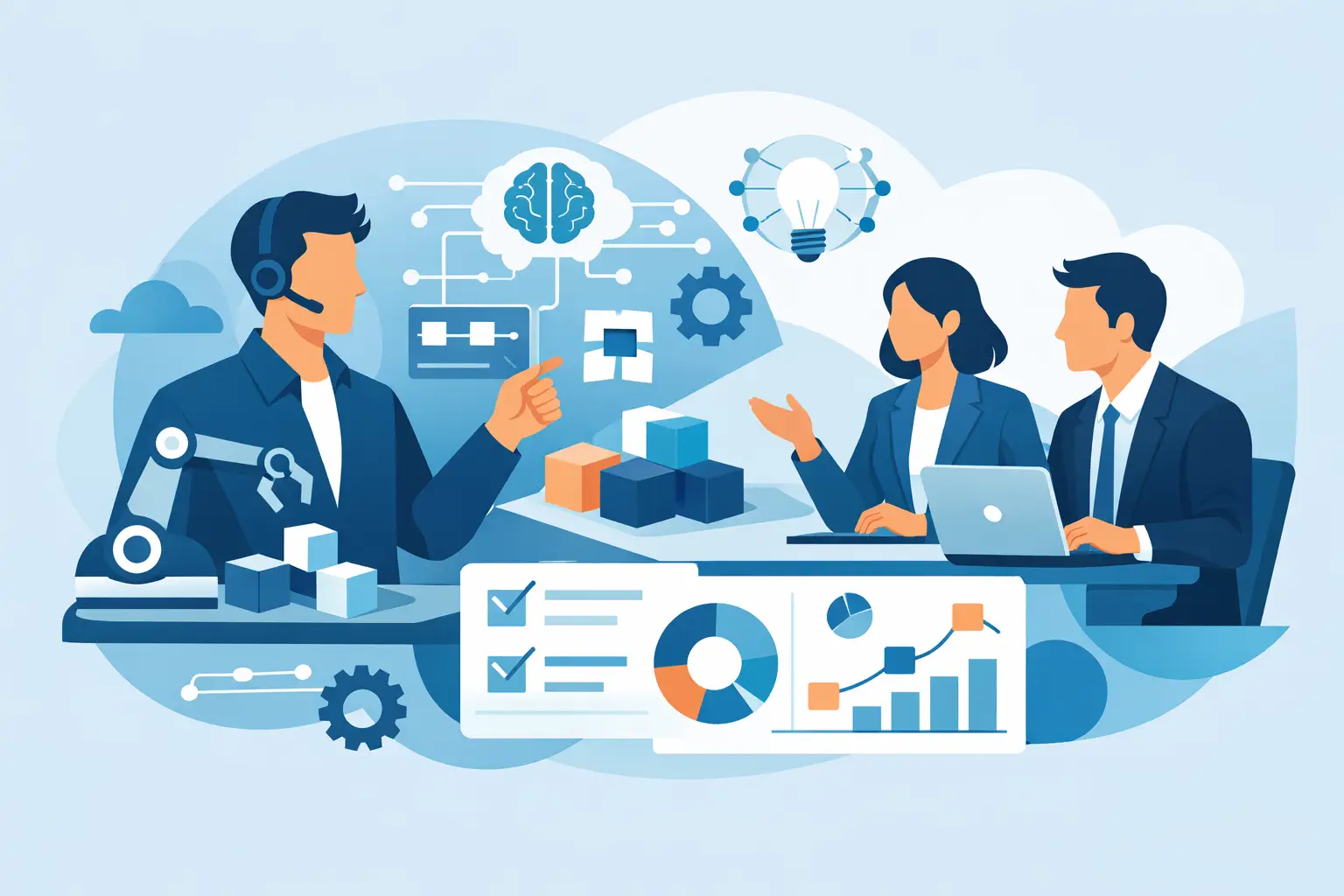
An ai workflow consultant sits between strategy and implementation. They are not just there to run a workshop, write a deck, and disappear. They should be able to assess your current processes, spot the operational bottlenecks, recommend sensible tooling, and help build the actual workflows that your team will use.
In practical terms, that might mean reducing manual client onboarding, improving how enquiries are handled, automating reporting, cleaning up internal knowledge access, or speeding up proposal and document production. The work is less about impressive demos and more about making ordinary business processes less wasteful.
For a small or mid-sized business, this usually comes down to four things. First, identifying work that is repetitive but still important. Second, deciding what should be automated, assisted, or left alone. Third, choosing tools that fit your current setup. Fourth, putting the process into live use so the team actually adopts it.
That last part is where many AI projects stall. The idea sounds good, but nobody owns the build, nobody tests edge cases, and nobody trains the team properly. Six weeks later, the tool is half-used and the original problem is still there.
Why businesses hire an AI workflow consultant
Most firms do not lack ideas. They lack time, internal capability, and a clear order of operations.
Business owners and managers are being sold AI from every direction. One platform claims to automate everything. Another promises a chatbot for every department. A third wants to replace half your stack. The result is predictable - too many trials, too many subscriptions, and no real change in how work gets done.
A good consultant brings structure. They help you separate useful automation from expensive distraction. They also give you a realistic view of trade-offs. Not every task should be automated. Not every process needs AI. In some cases, a cleaner handoff between people will do more than another tool.
That is especially true in service businesses, agencies, consultancies, and operationally busy SMEs. In those environments, the cost of poor workflow design is not abstract. It shows up as missed follow-ups, inconsistent delivery, long lead times, poor visibility, and managers spending their day chasing status updates.
An AI workflow consultant should be able to look at that mess and make it simpler.
What good consultancy looks like in practice
The best work usually starts with an audit. Not a vague innovation session - a proper review of how work currently happens. Where do requests come in? Who handles them? What gets copied manually? Where do delays happen? Which decisions are repeated every week? What information is hard to find when it should be easy?
Once that is clear, the consultant can map opportunities properly. Some workflows will suit straightforward automation. Some will benefit from AI assistance, such as drafting, summarising, classification, or search. Some should stay manual because the risk of error is too high or the process is too inconsistent.
This is where commercial judgement matters. The cheapest-looking automation is not always the best fit. A clever AI setup that saves fifteen minutes a week is not worth much if it adds another monthly subscription and nobody maintains it. On the other hand, a modest improvement to a high-volume admin process can pay back quickly.
A capable consultant should also work inside the reality of your business. That means using your existing systems where possible, building on accounts you control, and avoiding unnecessary complexity. If a solution only works because the consultant is permanently in the middle of it, that is not a strong operational design.
The problems worth solving first
Not every workflow deserves immediate attention. The best starting points are usually the ones that are frequent, rules-based, and painful.
Client onboarding is a common example. Many firms still collect information across email threads, forms, documents, and calls, then manually move it into project tools, CRMs, folders, and internal notes. That is slow and error-prone. A consultant can redesign that process so information is captured once, routed correctly, and turned into usable internal outputs automatically.
Another good candidate is internal reporting. Managers often spend hours compiling updates from different systems just to get a basic view of work in progress. AI can help summarise, categorise, and present operational data, but only if the underlying workflow is designed sensibly.
Knowledge access is another area where businesses waste time. Teams repeatedly ask the same questions because information lives in old documents, inboxes, meeting notes, and random cloud folders. In the right setting, an AI-supported knowledge workflow can reduce interruption and help people find what they need faster. But it needs governance. If the source material is messy, the answers will be too.
What to watch out for
There is a difference between a useful consultant and someone selling theatre.
Be cautious if the conversation is dominated by trends, model names, or promises of full automation before anyone has understood your workflow. Be cautious if every recommendation requires a new platform. And be cautious if the output is mostly strategic language with very little build, testing, or rollout.
You should also question any approach that creates lock-in. If the consultant builds everything on their own accounts, keeps the logic opaque, or makes basic changes difficult without them, you are not gaining capability. You are renting it.
Good consulting should leave your business better organised and more self-sufficient than it was before. Ongoing support can still be valuable - most businesses need iteration, maintenance, and expansion over time - but the relationship should be based on momentum, not dependency.
How to know if you need an ai workflow consultant
If you already know where work is breaking down but cannot get traction on fixing it, that is a strong sign. The same applies if your team is drowning in admin, your software stack keeps growing without delivering much value, or you have started several AI experiments that never made it into day-to-day operations.
You may also need outside help if you are stuck between extremes. On one side, there is fear of doing nothing while competitors move faster. On the other, there is pressure to buy too much, too soon, without a clear use case. A consultant should help you avoid both mistakes.
For many SMEs, the real value is not technical complexity. It is having someone who can translate business friction into sensible systems, then follow through until those systems are live and useful. That is why firms such as AI For Businesses focus less on AI as a headline and more on workflow design, tool fit, ownership, and steady implementation.
Choosing the right consultant
Look for someone who asks operational questions before technical ones. They should care about margin, time, delivery quality, and team capacity - not just automation for its own sake.
Ask how they assess workflows, how they prioritise opportunities, and who builds what. Ask whether they work within your current tools where possible. Ask how they handle documentation, handover, and support after launch. And ask what happens when a process changes in three months, because it probably will.
The right answer is rarely flashy. It is usually calm, specific, and commercially grounded.
A good ai workflow consultant will help you make better use of the people and tools you already have, then add AI where it genuinely improves the way the business runs. That is the point. Not more noise, not more dashboards, not another abandoned software trial. Just clearer workflows, less drag, and a business that moves with less effort.
Written by
AI For Businesses
The team at AI For Businesses helping UK companies adopt AI in practical, build-focused ways.
Enjoyed this article?
Get more practical AI tips delivered to your inbox weekly.