AI Automation vs Manual Processes
AI For Businesses
AI automation vs manual processes: learn where AI saves time, where people still matter, and how UK firms should choose the right mix.
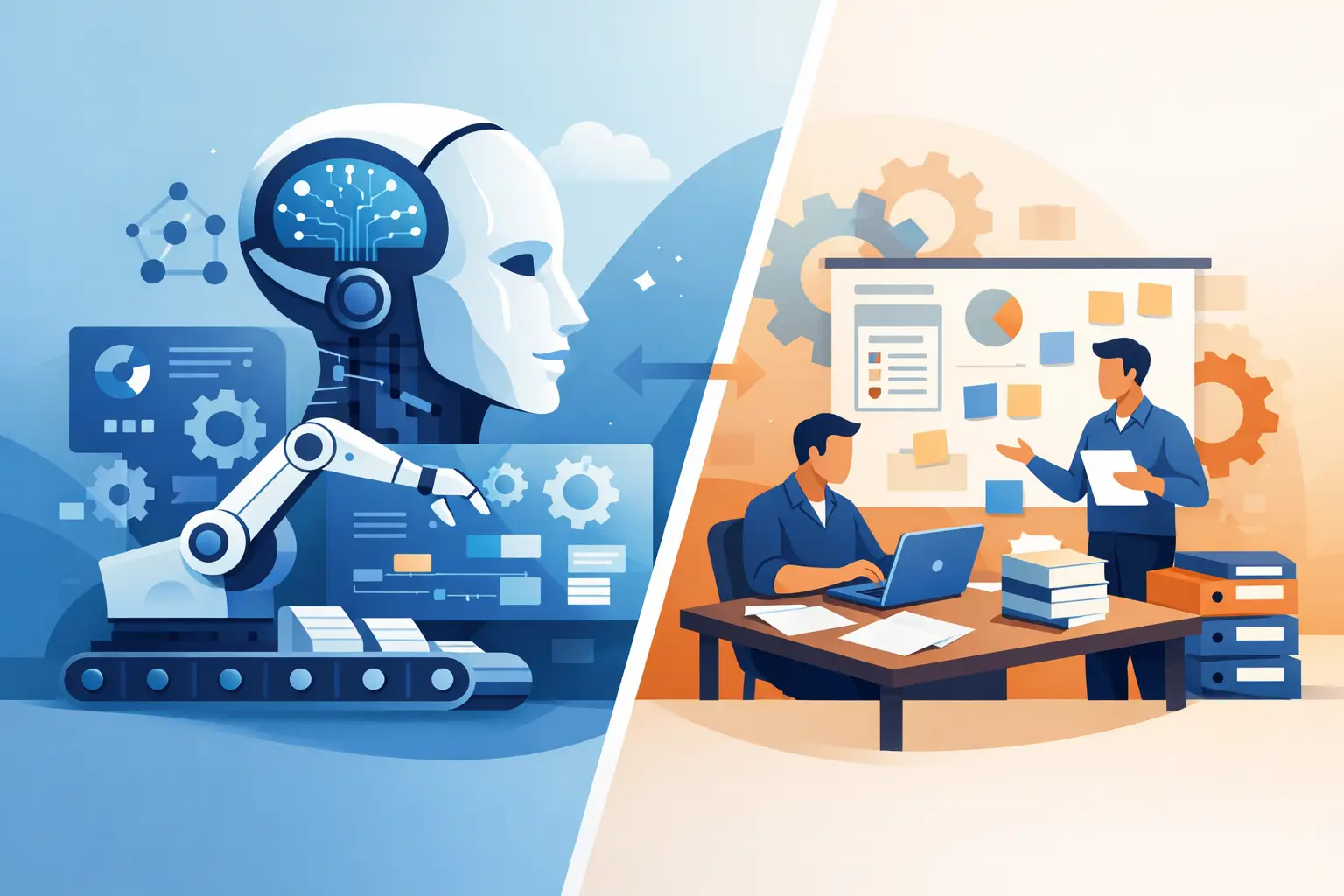
A lot of businesses are still paying good people to copy information from one system to another, chase updates by post and email, reformat documents, and patch together reporting in spreadsheets. That is where the real conversation around ai automation vs manual processes starts - not with hype, but with the daily drag on time, margin, and management attention.
For most small and mid-sized firms, this is not a question of replacing people with software. It is a question of deciding which work genuinely needs judgement, context, and accountability, and which work should stop landing on someone’s desk in the first place.
What ai automation vs manual processes actually means
Manual processes are not just tasks done by hand. They are workflows that rely on people to move work forward step by step. That might mean logging enquiries, sending reminders, updating project trackers, checking documents, producing first drafts, or pulling figures together for a weekly report.
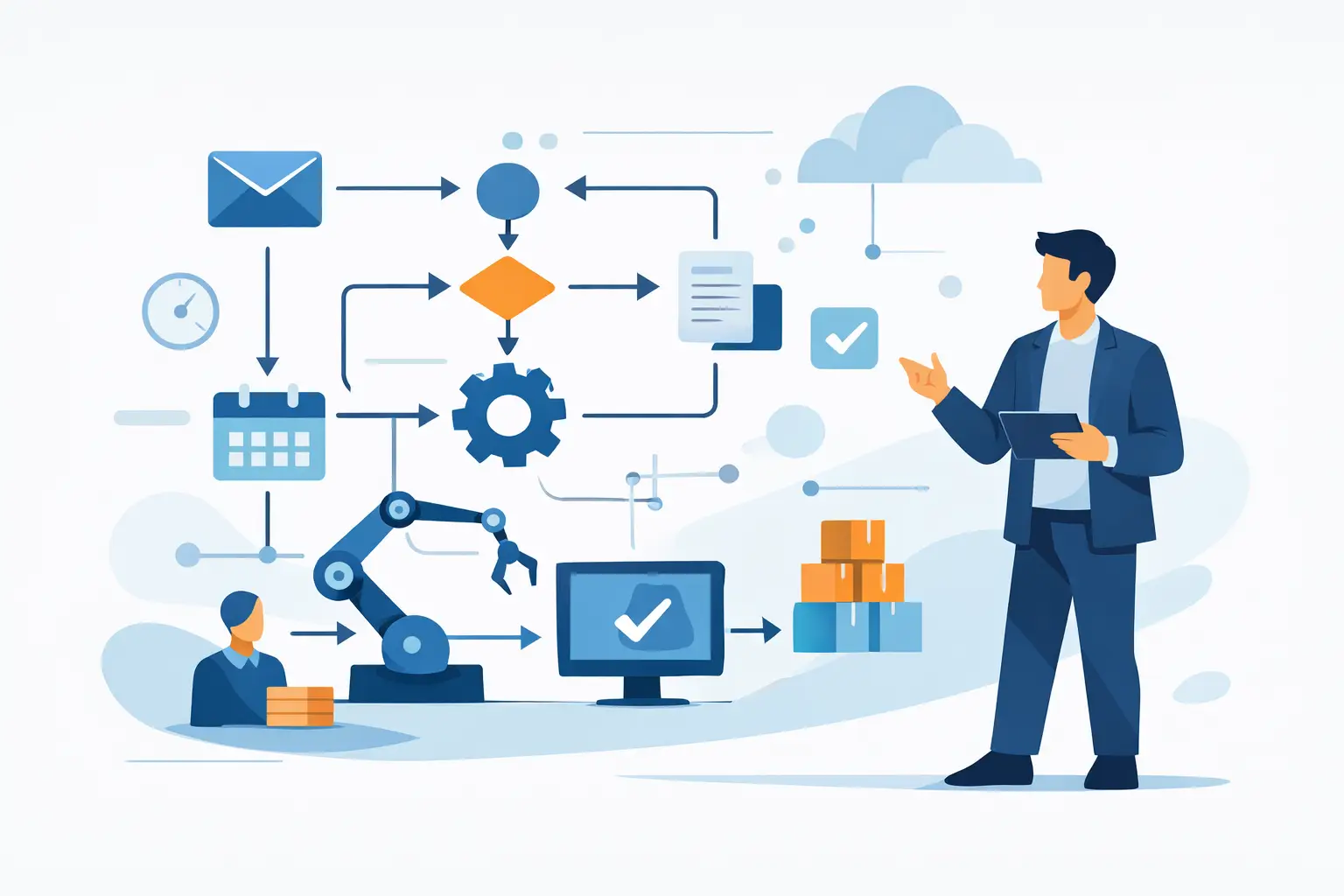
AI automation changes that pattern. Instead of asking a team member to handle each action, you design a system that can classify, draft, route, extract, summarise, or trigger the next step automatically. In practice, that often means combining AI with forms, CRMs, email, document tools, and internal operating rules.
The difference matters because manual work creates friction in places owners often stop noticing. A five-minute task done 20 times a day becomes a hidden operating cost. A delay in updating one system causes errors in another. A manager spends Friday afternoon checking admin instead of making decisions.
Where manual processes still make sense
Not every process should be automated, and this is where many AI conversations go wrong. Manual work is still the right choice when the task is rare, unclear, high risk, or heavily dependent on human judgement.
If a senior staff member is resolving a sensitive client complaint, reviewing a contract variation, or handling a complex employee issue, full automation is usually the wrong move. These tasks need nuance. They often involve context that sits outside the data in a system. They may also carry legal, financial, or reputational risk.
Manual processes can also be sensible when the workflow itself is still changing. If your business has not yet agreed how leads should be qualified or how handovers should work between sales and delivery, automating too early can simply lock in confusion.
There is also a cost point. If a task happens once a month and takes ten minutes, it may not justify a build. Good operations are not about automating everything. They are about removing the right bottlenecks.
Where AI automation tends to outperform manual work
AI becomes useful when work is frequent, repetitive, rules-based, and time-sensitive. This is especially true when the process touches multiple systems or creates a backlog for the team.
A common example is inbound enquiry handling. In many firms, new leads arrive through web forms, email, LinkedIn messages, and referrals. Someone then reads them, categorises them, forwards them, logs them, and often forgets to follow up consistently. An AI-assisted workflow can sort enquiries, extract key details, create records, generate a first response, and flag priority leads for review.
The same applies to internal admin. Meeting notes can be turned into task lists. Documents can be checked for missing information. Repetitive client questions can be drafted into usable replies. Reports can be assembled from structured data instead of being rebuilt each week.
The gains are not only speed. You also get more consistency. Manual processes vary depending on who is busy, who is careful, and who remembers the steps. Automation reduces that variation. That means fewer dropped tasks, cleaner records, and less management effort spent checking whether routine work was done properly.
The real trade-off: flexibility versus consistency
The strongest argument for manual processes is flexibility. People can spot odd cases, ask better questions, and adapt when something unexpected happens. That matters in service businesses, operations teams, and client-facing work where exceptions are normal.
The strongest argument for AI automation is consistency at scale. Once a process is clearly defined, software will do it the same way every time. It does not get distracted. It does not forget the final step. It does not leave a task sitting in an inbox because the person responsible is off sick.
Most businesses need both. The practical model is not AI or people. It is AI for the predictable middle of the process, with a human stepping in where judgement is required.
Think of a quoting workflow. AI can gather requirements, structure the brief, draft the first version, and check for missing fields. A human can then review pricing, sense-check scope, and make the final decision. That is usually where the value sits - not in full automation, but in reducing low-value effort around the parts that actually need expertise.
How to decide what should stay manual
If you are comparing ai automation vs manual processes inside your own business, start with friction rather than technology. Look for recurring work that causes delays, errors, rework, or unnecessary management oversight.
Ask a few plain questions. Does this happen often? Is the process broadly the same each time? Are people copying data, chasing updates, drafting the same kind of response, or checking the same thing repeatedly? Does the task interrupt higher-value work? If the answer is yes, it is a strong automation candidate.
Then ask the harder question: what would go wrong if this ran without a person touching every step? If the answer is minor and reversible, automation is usually worth testing. If the answer involves legal exposure, broken client trust, or financial mistakes, you need tighter controls and likely a review step.
This is also why workflow design comes before tool selection. Businesses often buy software too early, then try to force messy processes through it. The better order is simpler: map the current workflow, remove obvious waste, define the decision points, then automate what is stable enough to automate.
Common mistakes when comparing AI and manual work
One mistake is assuming AI will fix a broken process on its own. It will not. If nobody agrees how jobs should be approved, where information should live, or who owns each stage, automation just moves disorder faster.
Another mistake is treating manual work as free. It rarely is. The cost sits in salaries, delays, missed follow-ups, duplicated tools, and owner involvement in things that should not need owner involvement.
There is also a tendency to judge AI only on perfection. Manual processes are rarely perfect either. People miss steps, mistype figures, forget to reply, and interpret rules differently. The better comparison is not AI against an ideal version of human work. It is AI against how the process actually runs now.
Finally, some firms automate in ways that create dependency. They build on the wrong accounts, use disconnected tools, or create systems nobody internally understands. A better approach is to build practical workflows your team can own, maintain, and improve over time. That is usually where long-term value comes from.
A sensible model for UK businesses
For most UK SMEs, the right answer is a staged one. Keep manual control where trust, accountability, and commercial judgement matter. Use AI automation where the work is repetitive, admin-heavy, and slowing the business down.
That may mean automating lead triage but keeping sales calls human. It may mean drafting project updates automatically but having account managers approve them. It may mean extracting data from documents while finance checks exceptions. This is not a compromise. It is what a well-run operating model looks like.
If you are unsure where to begin, start with one workflow that is annoying, frequent, and measurable. Time saved is useful, but so are cleaner handovers, fewer missed tasks, faster response times, and less software sprawl. Those are the changes teams feel quickly.
At AI For Businesses, that is usually the difference between experimentation and progress. The firms that get results do not chase flashy use cases. They pick the process, define the rules, build the workflow properly, and keep improving it month by month.
The useful question is not whether AI is better than people. It is whether your people are spending their time on work that actually needs them.
Written by
AI For Businesses
The team at AI For Businesses helping UK companies adopt AI in practical, build-focused ways.
Enjoyed this article?
Get more practical AI tips delivered to your inbox weekly.